A small child ventures away from a parent to explore, then returns for comfort when something feels frightening. Behind this simple movement lies a central idea in attachment theory: a dependable emotional bond gives us the security to explore the world.
In our first years of life, the relationship with a primary caregiver helps shape what we expect from other people. Can we count on someone when we are distressed? Is it safe to express our feelings? Are we worthy of care?
The answers we begin to form can influence our confidence, relationships, and sense of self long after childhood.
Key Takeaways
- Dependable early care provides a secure base for exploration and connection.
- Insecure attachment patterns reflect different ways of responding to uncertainty, rejection, or fear.
- Early relationship experiences can influence stress responses, later relationships, and self-understanding.
Attachment as a Secure Base
Attachment theory argues that a strong emotional and physical bond with a primary caregiver is critical to early development. When that relationship feels dependable, the caregiver becomes a secure base: someone we can leave to explore and return to when we need reassurance.
Security does not mean never feeling afraid. It means having confidence that comfort and protection will be available.
When care feels unreliable or frightening, exploration becomes more difficult. The world can seem threatening because we are uncertain whether there is a safe place to return to.
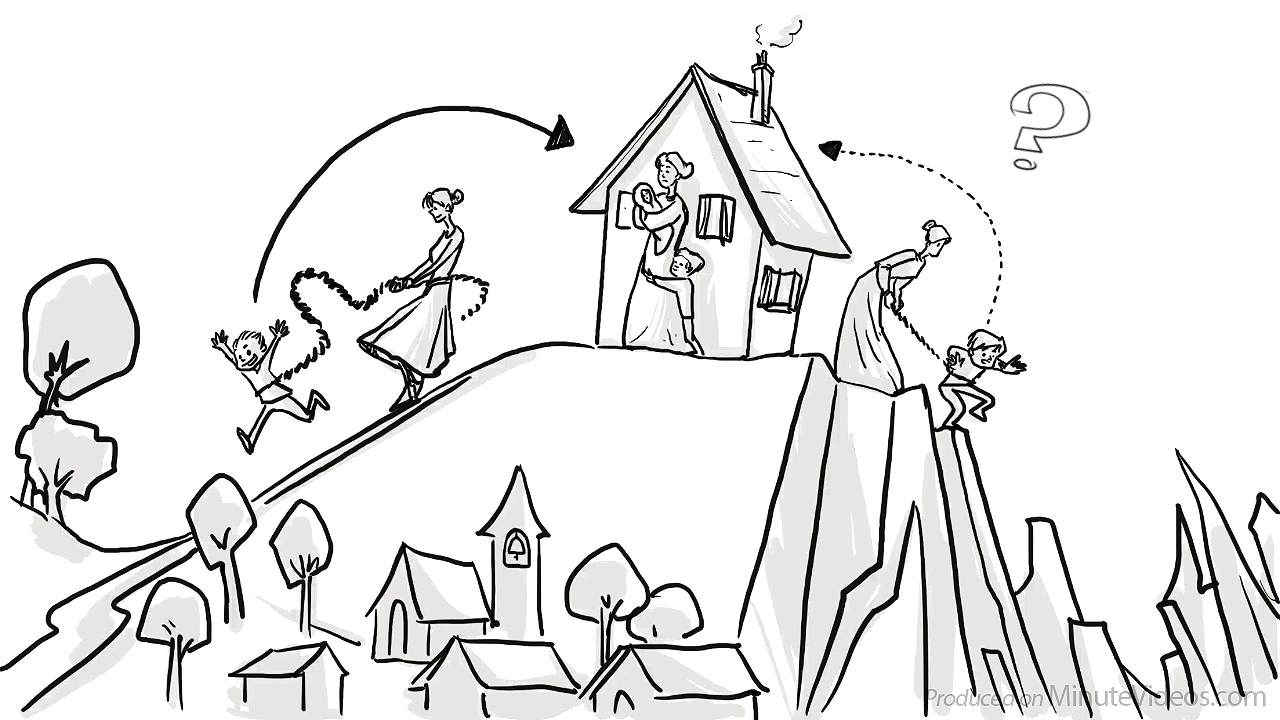
These early expectations can carry into later relationships. Secure attachment is associated with greater trust and an easier time connecting with others. Insecure attachment can involve mistrust, difficulty expressing needs, or trouble forming close relationships. These are patterns of expectation and behavior, not guarantees of how a person's life will unfold.
The Four Attachment Styles
This framework distinguishes one secure attachment pattern and three insecure patterns:
- Secure attachment: The caregiver is experienced as a reliable source of comfort and safety.
- Anxious-ambivalent attachment: Uncertainty about care leads to heightened distress and conflicting responses to closeness.
- Anxious-avoidant attachment: The child learns to suppress outward expressions of need or emotion.
- Disorganized attachment: The person who should provide safety is also a source of fear, leaving the child without a consistent strategy.
Secure, ambivalent, and avoidant attachment are described as organized patterns. Each involves a recognizable way of responding to distress, even when that response makes later relationships difficult. Disorganized attachment involves a conflict that disrupts a coherent response: the child needs comfort from someone they also fear.
One Family, Four Different Experiences
Imagine the Smith family, with four children: Luka, Ann, Joe, and Amy. Their parents are affectionate and attentive. They cuddle their children, make eye contact, speak warmly, and respond when they are needed.
Then their father becomes seriously ill and dies. Their mother must work while also caring for four children. The demands become overwhelming, and the children's experiences of care change.
This imagined family illustrates the attachment patterns. It is not a formula for predicting how children of different ages will respond to loss.
Luka: Secure Attachment
At six, Luka has already experienced years of dependable care. Although family life has changed, he continues to experience his mother as a safe haven. He can play independently while trusting that she is still there for him.
In this example, that confidence carries forward. Luka grows into a trusting, optimistic young man with a positive self-image. His early experience has given him an expectation that closeness can be safe and other people can be dependable.
Ann: Anxious-Ambivalent Attachment
Three-year-old Ann struggles with the reduction in attention. From her perspective, her mother's availability has become unpredictable.
Ann becomes clingy and increasingly anxious about their relationship. She discovers that escalating her distress, including screaming, can bring her mother's attention. But when comfort finally arrives, she responds with mixed feelings rather than simply settling into it.
The pattern is not just wanting closeness. It is wanting closeness while remaining unsure that it can be trusted. In the example, this uncertainty continues into adulthood, when others experience Ann as moody or unpredictable and her self-image is less positive.
Joe: Anxious-Avoidant Attachment
Two-year-old Joe spends his days with an uncle who loves him but believes that good upbringing requires strictness. When Joe becomes loud or emotional, his uncle reacts with anger and sometimes punishment.
Joe learns a protective strategy: showing fewer feelings may mean experiencing less fear. He begins to hide his emotions, not only with his uncle but in other situations too.
As an adult in this example, Joe continues to keep his feelings to himself and struggles to enter close relationships. What once helped him avoid an upsetting response now makes connection harder.
Amy: Disorganized Attachment
One-year-old Amy enters a nursery where staff are poorly trained, overworked, and stressed. Some are abusive.
Her difficulty is especially painful: the very people she turns to for security also frighten her. Seeking closeness and escaping danger pull her in opposite directions.
Without a dependable way to resolve that fear, her responses become disorganized. In the example, Amy later avoids social situations and sees herself as unworthy of love.
The important distinction is not nursery care itself, but the frightening and unsafe care Amy experiences there.
Why Early Stress Can Affect the Body
Attachment develops before children have the language to explain their anxiety. Yet an inability to describe distress does not prevent the body from responding to it.
Under stress, the adrenal glands, located above the kidneys, release hormones including adrenaline and cortisol. Heart rate and blood pressure rise, and the body becomes more alert.
When strong stress responses are repeatedly activated without adequate support, they can become harmful. This is the concern behind toxic stress: prolonged or excessive stress activation can interfere with developing brain and immune systems.
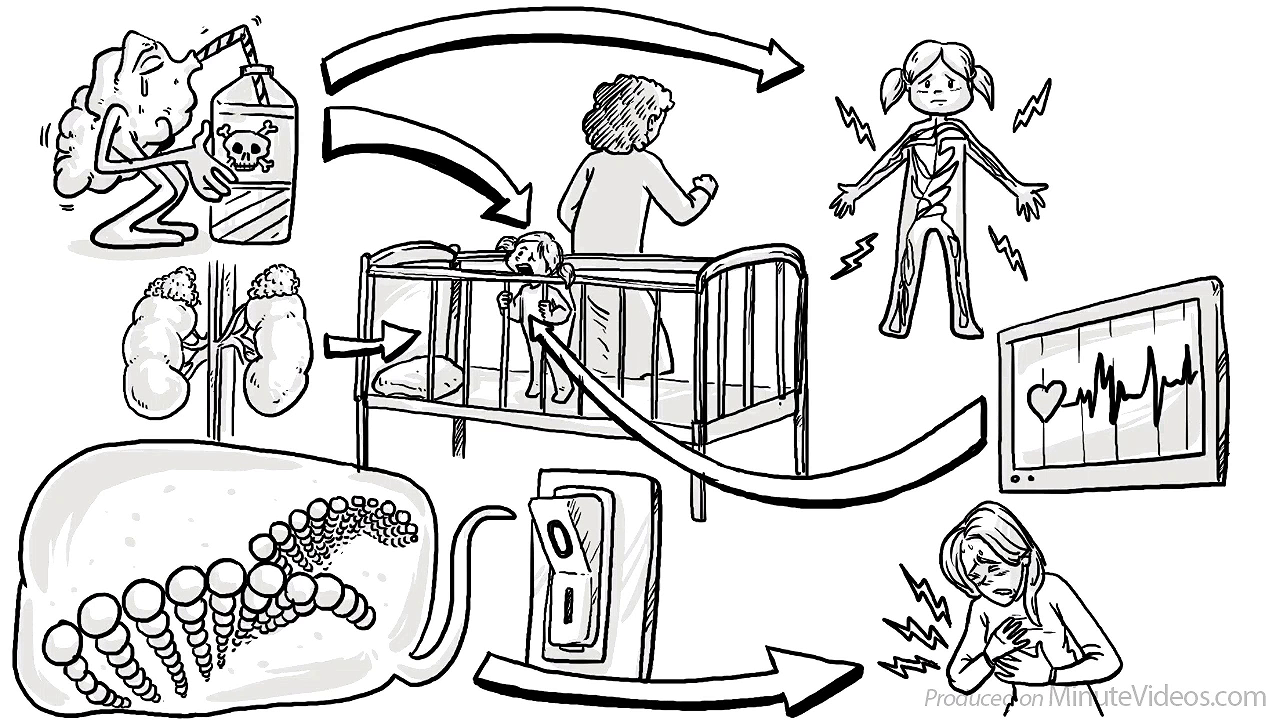
Very early stress, including stress during prenatal development, can also affect gene expression. This means changes in how genes are switched on or off, rather than a rewriting of the genetic code. Such biological effects help explain why early conditions may be relevant to health many years later.
How the Strange Situation Reveals Attachment Patterns
Researchers can assess attachment patterns around the end of the first year using a structured observation known as the Strange Situation.
In a simplified account, the child spends time playing in a room with their caregiver, experiences a brief separation, and is then reunited with them. The crucial observation is not simply whether the child cries when the caregiver leaves. It is how the child responds when the caregiver returns.
- A securely attached child typically seeks contact or comfort, settles, and eventually returns to play.
- An ambivalent response can involve seeking closeness while resisting comfort and remaining distressed.
- An avoidant response can involve avoiding or minimizing contact at reunion.
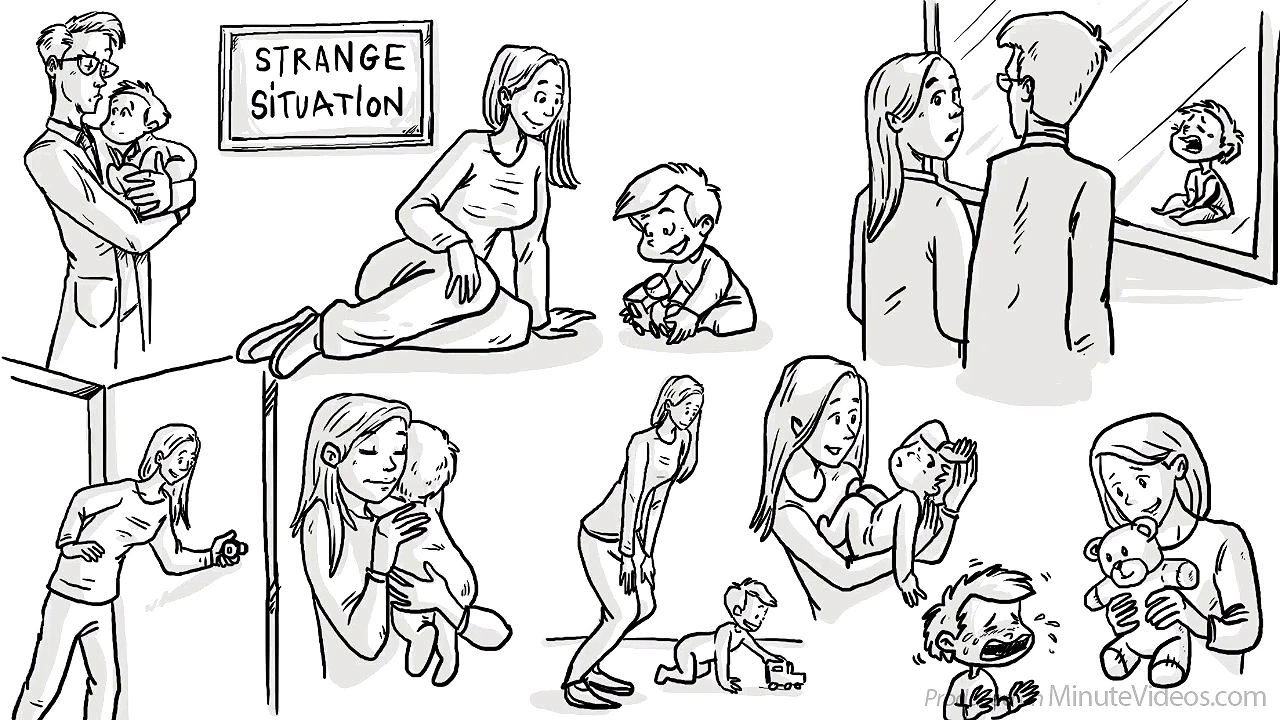
The reunion helps reveal whether the child can use the caregiver as a source of reassurance. A child who remains upset or cannot return to exploration may be showing a different pattern from one who is comforted and resumes playing.
What Long-Term Research Suggests
Research has connected early relationship experiences with later social, educational, and health outcomes.
Work associated with the Minnesota longitudinal research reported that assessments available by age three could help predict later high school dropout with 77% accuracy. Such findings highlight the relevance of early development, but they should not be read as a prediction of any individual child's future from one attachment label.
A separate 35-year study of parental caring and midlife health asked Harvard undergraduates how close they felt to their parents, then examined their health decades later.
Among those who had described a cold or strained relationship with their mother, 91% later had diagnosed health problems, including coronary artery disease, hypertension, or alcoholism. Among those who had reported a warm relationship, the figure was 45%.
These figures describe an association in a particular study. They do not establish that a difficult parental relationship alone caused later illness, or that warm relationships eliminate health risks.
How Early Relationships Can Reinforce Themselves
There is another reason the early years matter: they provide the starting point for later experiences.
A securely attached two-year-old may approach other children with greater confidence. Friendships at kindergarten can then reinforce the expectation that people are approachable and relationships are rewarding. Those experiences may support further connections at school, college, and eventually work.
For a highly insecure child, mistrust or withdrawal can make those opportunities harder to access. Fewer reassuring interactions may leave the child's original expectations unchallenged.
The influence is cumulative. Early relationships shape expectations, and those expectations can shape the experiences that follow.
Attachment and Understanding Ourselves
John Bowlby, a pioneer of attachment theory, emphasized the connection between communicating with a caregiver and understanding one's own inner life.
The idea is simple but profound. If a child's feelings cannot be safely expressed and met within a close relationship, those feelings may also become difficult for the child to recognize and understand.
From this perspective, difficulty trusting others can be connected to difficulty knowing ourselves. Understanding present-day feelings may require looking back at the earliest relationships in which we learned whether fear, sadness, and the need for comfort could be shared.
Attachment theory gives us a way to understand those beginnings: not merely as memories of childhood, but as early lessons about safety, connection, and our own worth.


