In 1887, Lord Acton warned that power invites corruption, and that unchecked power carries the greatest danger. But why might a gentle person become harder, more entitled, or less considerate after taking the big chair?
A rigged game of Monopoly offers a clue. It suggests that privilege can change not only how we behave, but also how we explain our success.
A Coin Toss, an Unequal Game
Before the Monopoly game began, a coin toss randomly selected one player for a substantial advantage. The favored player received:
- More money at the start.
- More dice rolls.
- Larger payouts for passing Go.
The unequal starting conditions were no secret. One player had been handed a much easier path to victory, not because of skill, but because of chance.
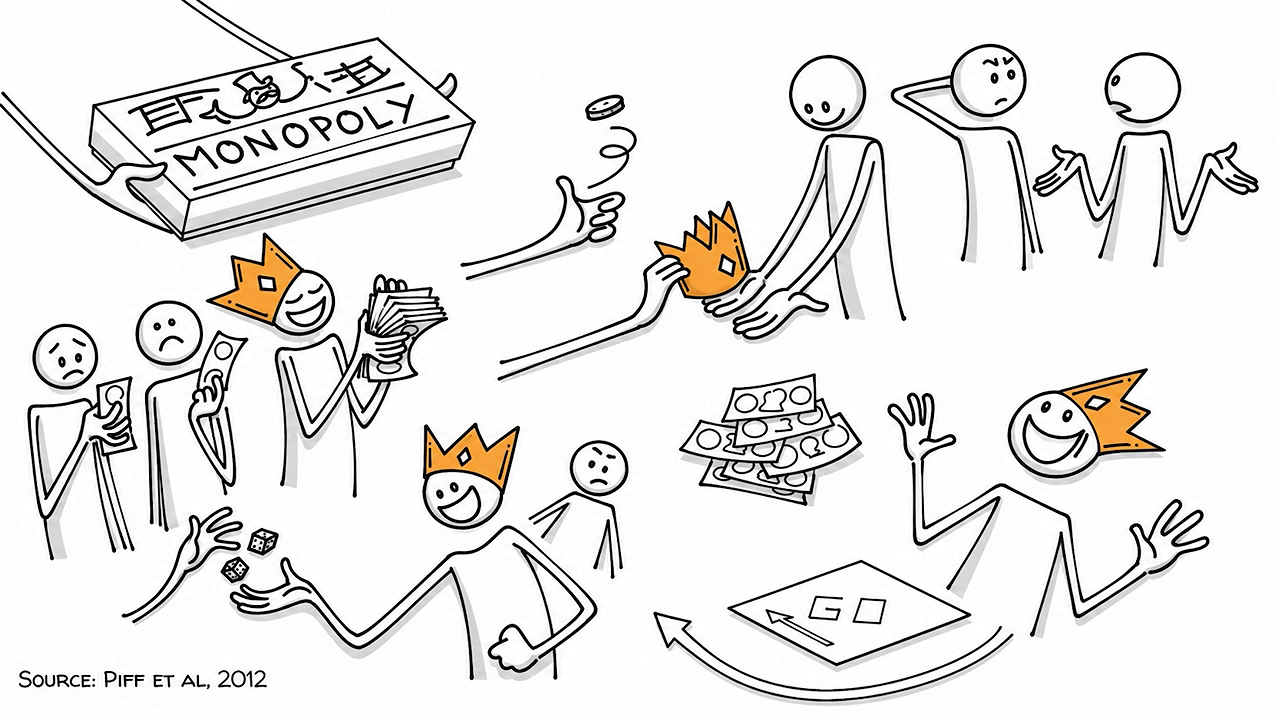
Yet within just fifteen minutes, the advantaged player became louder and more dominant, even taking more of the snacks intended for everyone. When these players eventually won, they often emphasized their strategy rather than their good fortune.
The striking change was not simply winning. It was turning an arbitrary advantage into a story of personal merit. The coin toss faded into the background. Their own decisions took center stage.
If cardboard money can encourage entitlement so quickly, consider what might happen when the advantages involve real wealth, property, and authority.
How Privilege Becomes Distrust
Power often arrives through a title, wealth, or the capacity to use force. These advantages open doors. They make instructions easier to give and harder for others to refuse.
They also change the behavior of the people around us. Others may become unusually friendly, imitate our habits, or offer loyalty. At first, this attention seems like another benefit of rising status.
But friendliness may come with expectations. Someone wants access. Someone else wants influence or protection. Gradually, a troubling question emerges: do these people value us, or what we can do for them?
That doubt can erode our sense of equality. Former friends begin to look less like independent people and more like useful instruments. We may start thinking of them as people to deploy, replace, or quietly dismiss.
Eventually, both opponents and followers can feel threatening. We raise fences, close our calendars, and move through the world surrounded by an entourage. The protections that make us feel safer also separate us from ordinary life.
When Isolation Becomes Moral Superiority
From a distance, complicated human problems can begin to look deceptively simple. Grand doctrines, whether nationalism, socialism, or capitalism, may seem to offer a single answer for everyone outside our protected circle.
The danger is not merely having a political or economic belief. It is becoming insulated enough to mistake our preferred answer for unquestionable wisdom.
We may come to believe that we occupy morally higher ground, that our work serves humanity itself. Once that belief takes hold, bending the rules can feel justified by a greater purpose.
A noble aim can become permission to escape ordinary restraints. Surrounded by loyal disciples and shielded from consequences, a powerful person may lose the ability to recognize others as equals. People who deserve consideration become obstacles to a supposedly righteous mission.
This is where entitlement can become something far more dangerous: a self-granted license to cause serious harm.
Power, Reward, and Restraint
One explanation for these changes concerns the balance between avoiding harm and pursuing rewards. Power may weaken caution while strengthening the impulse to seek immediate rewards.
The approach and inhibition theory of power offers a psychological framework for understanding this shift. Rather than treating authority as something that changes only our opportunities, it considers how power can change our motivations and behavior.
The result can be actions that are bolder, faster, and more self-centered. Restraint weakens. Cooperation becomes less important. Combined with distrust and isolation, this shift can make the effects of power harder to correct.
The Strongest Defense Is Structure
If power can distort judgment, good intentions alone are not enough. The strongest defense is to build arrangements that keep authority accountable.
- Rotate roles: Make positions of power temporary rather than permanent possessions.
- Keep the books open: Make decisions and the use of resources available for scrutiny.
- Share oversight: Avoid leaving those in authority as the sole judges of their own conduct.
- Protect routine dissent: Make disagreement a normal, protected part of decision-making, not an act of personal courage.
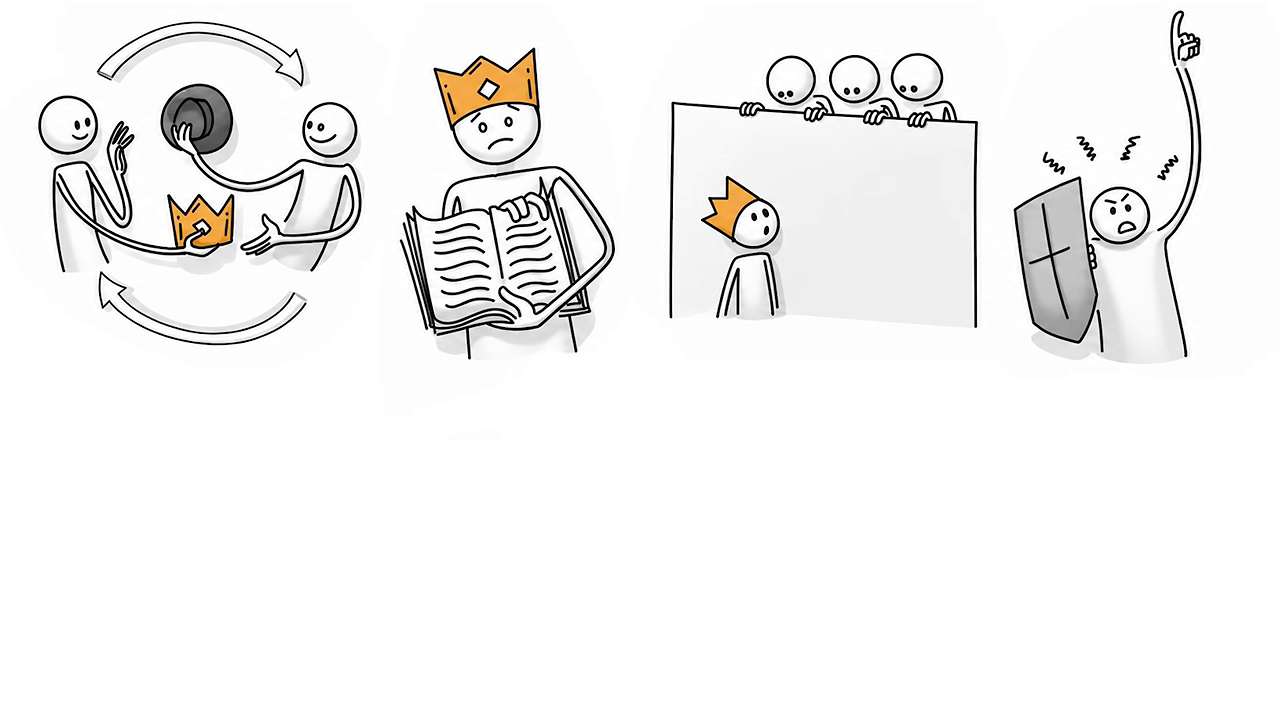
These safeguards work against the very conditions that allow power to become dangerous: permanence, secrecy, isolation, and unquestioned loyalty.
The lesson of the rigged Monopoly game is not simply that successful people should be more modest. It is that privilege can make its own origins easy to forget. A healthy institution does not depend on every leader remembering that lesson unaided.
Liberty survives when structures remind those who govern that they are mortal, and those they govern that they are free.
|