When a team struggles, it is easy to blame people for being lazy, uncaring, or incompetent. But collaboration often breaks down for a simpler reason: nobody knows who should do what.
The RACI matrix is a project management tool that makes roles and responsibilities clear. It separates doing the work from owning the result, giving advice, and receiving updates. Four letters can help a whole team work with fewer misunderstandings.
What Does RACI Stand For?
RACI describes four ways someone can be involved in a task:
- Responsible: The people who do the work.
- Accountable: The one person who owns the result.
- Consulted: The people who provide advice before decisions are made.
- Informed: The people who need to know after decisions are made.
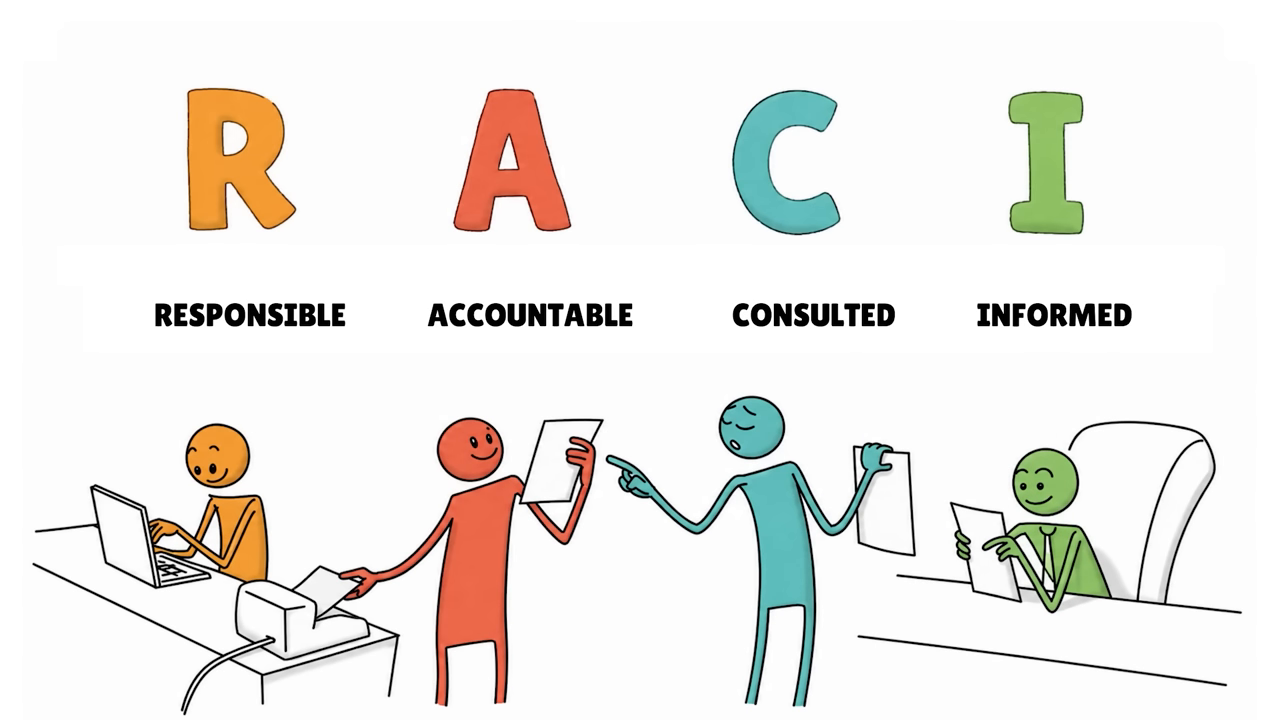
Two distinctions matter here. Responsible is not the same as accountable: doing the work and owning the outcome are different jobs. Likewise, being consulted is different from being informed. One means contributing before a decision; the other means receiving an update afterward.
How to Create a RACI Matrix
Imagine organizing a school fair. The team includes a project leader, two designers, a teacher, a parent representative, and plenty of volunteers. Everyone wants to help, but enthusiasm alone does not explain who handles the venue, posters, budget, snacks, or safety.
A simple shared chart makes those assignments visible. Here is how to build it:
- List the tasks across the top. For the school fair, these include the venue, posters, budget, snacks, and safety.
- List the team roles down the side. Include the project leader, designers, teacher, parent representative, and volunteers.
- Assign the RACI roles for each task. Identify who is accountable, who does the work, who should advise, and who needs an update.
- Review the assignments together. Make sure everyone understands and agrees with their part.
The final step matters. A chart cannot create shared understanding if the people named in it do not agree on what their assignments mean.
The Essential Rule: One Accountable Person per Task
A task can have several responsible people, but it must have exactly one accountable person.
Several people may contribute to completing a job. That does not mean they should all share ownership of the final result. If everyone is accountable, it becomes difficult to tell who actually owns the outcome.
The rule applies to each task, not just to the project as a whole. Every task needs a clear answer to the question: who owns this result?
A RACI Example: Making the School Fair Poster
Consider one job from the school fair: creating the poster. The roles work like this:
- Responsible: the two designers. They develop different poster ideas and produce the drafts.
- Accountable: the project leader. The leader owns the result and decides which draft to use.
- Consulted: the teacher. The teacher reviews the work and provides advice before the choice is made.
- Informed: parents and volunteers. They receive an update after the decision.
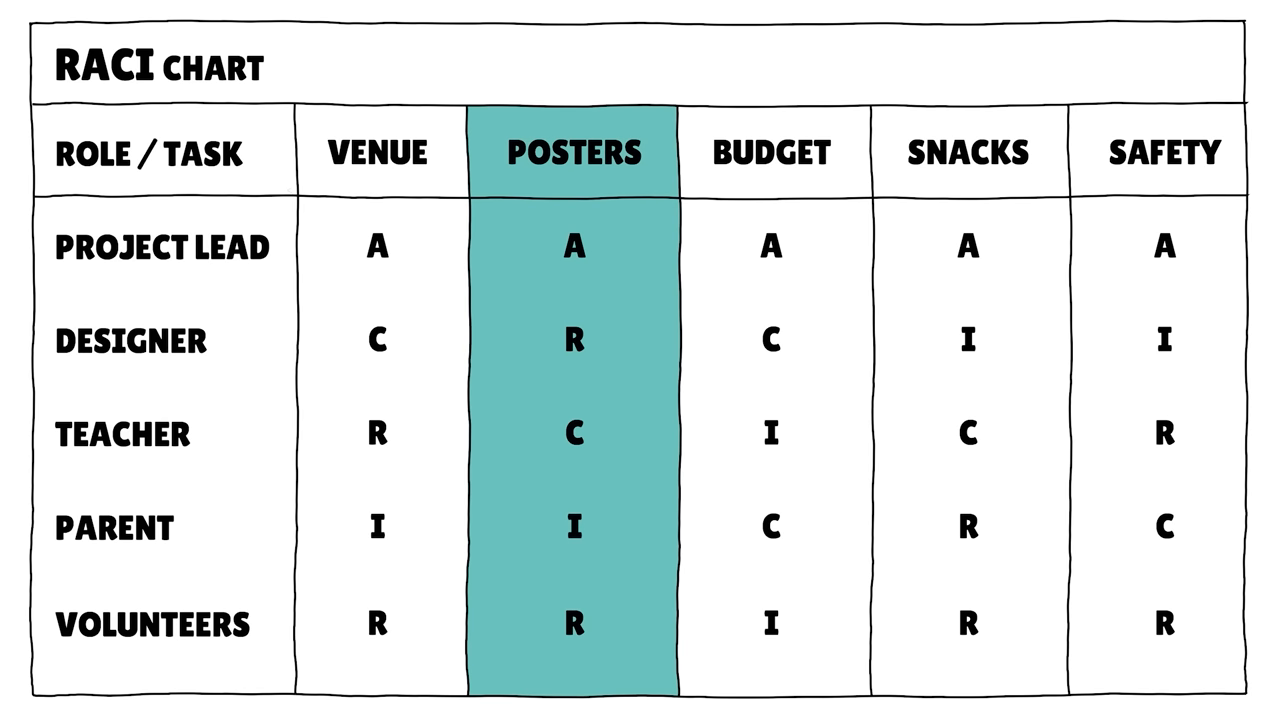
Notice how everyone can contribute without having the same role. The designers create, the teacher advises, the project leader decides, and parents and volunteers stay informed. The distinction makes the path from first draft to final choice clear.
When Is a RACI Matrix Most Useful?
A RACI matrix is especially useful when projects cross departments or require multiple approvals. In those situations, several people may be involved without having the same responsibility or decision-making role.
Making those differences explicit helps prevent duplicated effort and confusion. It also gives people a clearer sense of where their contribution begins and ends. For another practical reference, Atlassian’s guide to RACI charts explores the same role-assignment approach.
You do not need special software. A spreadsheet works. So does a whiteboard, or even a napkin. The tool is not the point. The goal is clarity.
Clarity saves time, helps prevent blame, and lets people focus on their part of the mission. And once everyone knows what to do, a team may discover that its people were motivated, caring, and competent all along.
|