When builders pour a house’s foundation, there is a brief moment when the concrete is soft enough to shape. Then it hardens. Early brain development follows a similar pattern: some experiences have an especially powerful influence while the brain’s circuits are still taking shape.
These developmental windows help explain why the timing of an experience can matter as much as the experience itself. Sleep, vision, attachment, hearing, and language all have foundations in early life.
The concrete analogy has limits. A brain does not turn to stone, and learning does not stop after childhood. But certain foundations become much harder to establish when the experiences they depend on arrive late.
What Are Critical Periods in Brain Development?
A critical period is a window during development when particular experiences are needed for a brain system to develop normally. The central idea is simple: the brain is not equally receptive to every kind of experience at every age.
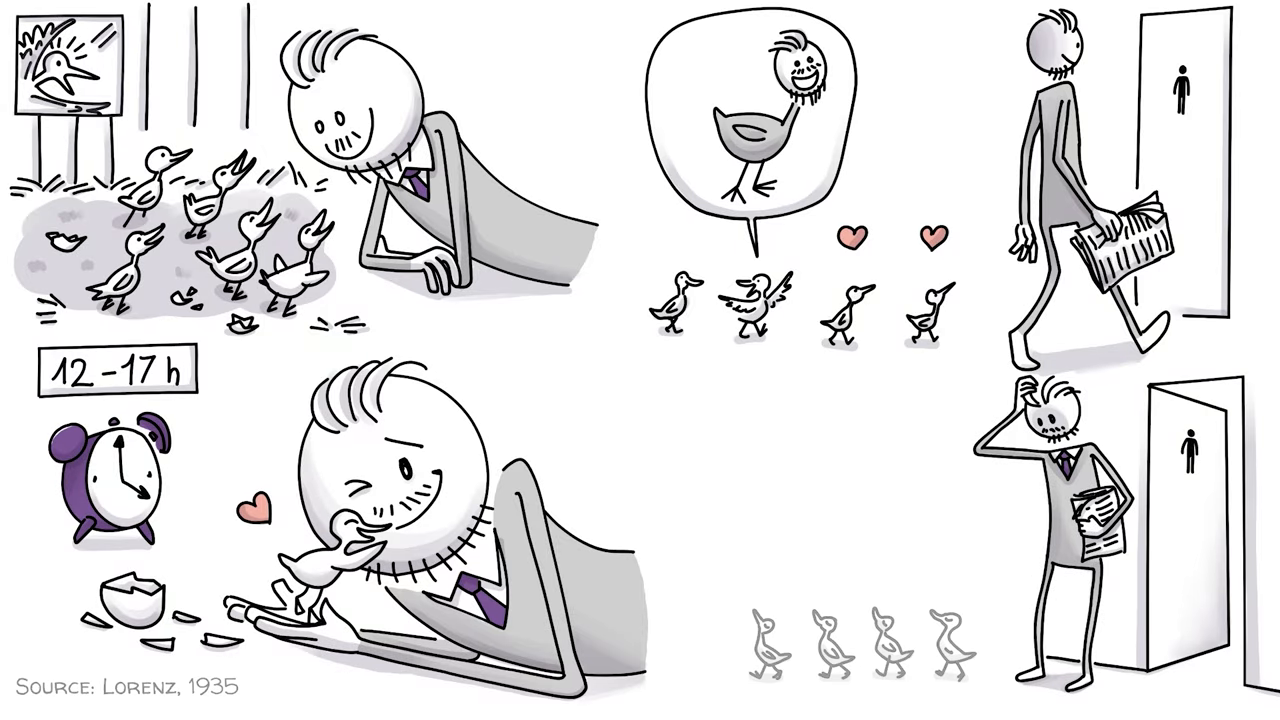
The Nobel Prize-winning zoologist Konrad Lorenz famously explored this through imprinting in goslings. When newly hatched goslings encountered him rather than their mother, they formed a bond with him and followed him around.
Timing was essential. In the example Lorenz studied, imprinting occurred reliably within roughly 12 to 17 hours after hatching. The same encounter later did not produce the same result.
In the 1960s, experiments with newborn kittens revealed another striking example. Researchers temporarily sewed one eye shut. When they reopened it several weeks later, vision through that eye was severely impaired. The visual cortex had reorganized to favor the eye that continued receiving input.
This work, part of the research recognized by the 1981 Nobel Prize in Physiology or Medicine, showed that opening an eye is not enough if the brain has missed essential visual experience. Some developing systems operate on a powerful use-it-or-lose-it principle.
1. Sleep: Development Begins Before Birth
Sleep development starts before a baby enters the world. During pregnancy, a developing child already experiences patterns of sleep and wakefulness.
Disruptions during this prenatal period can have lasting consequences. Alcohol exposure during pregnancy, for example, can disturb developing sleep patterns and is associated with sleep difficulties that may persist long after birth.
The important point is not that a fetus learns a bedtime routine. It is that the systems supporting sleep are already developing. Their foundations begin forming well before parents face their first sleepless night.
2. Vision: The Brain Needs Clear Visual Input
Vision develops rapidly after birth as the eyes begin supplying information to the brain. Healthy development depends not only on the eyes themselves, but also on the brain receiving usable visual input.
A congenital cataract illustrates the problem. A cloudy lens can prevent clear images from reaching a baby’s developing visual system. Removing the cataract early gives that system a better opportunity to develop. Leaving the obstruction untreated for years can result in lasting impairment, even after the lens is cleared.
Early treatment matters. The lesson is not to wait for a particular birthday. A visual obstruction during infancy deserves prompt attention because the brain is building its capacity to interpret what the eyes receive.
Visual experience also matters as children grow. Spending excessive time focused on nearby objects, including screens, is a concern in the development of myopia, or nearsightedness. This is a different problem from cataract-related deprivation, but it reinforces the broader point: the conditions under which a child uses their eyes matter.
3. Attachment: Early Care Helps Build Trust
During the first 24 months, children depend on caregivers for food, comfort, safety, and affection. These repeated experiences help establish whether the person they rely on feels dependable.
A primary caregiver, often the mother, becomes the child’s first foundation for trust. Nourishment and loving care are therefore more than immediate necessities. They also help shape expectations about relationships.
When care feels unreliable or frightening, a child may develop an insecure attachment. That insecurity can be associated with later difficulties trusting others, anxiety, or pessimistic expectations.
This is not a prediction of an unchangeable personality. It is a reminder that early relationships help shape how children approach other people. The emotional environment is part of development, not something separate from it.
4. Hearing: Earlier Access Can Support Speech Development
Hearing and spoken language develop together. For children born deaf who receive cochlear implants, the timing of access to sound can make a substantial difference to speech development.
Children who receive an implant before age three tend to have better spoken-language outcomes, sometimes approaching those of hearing peers. Children implanted after age seven often face more persistent difficulties.
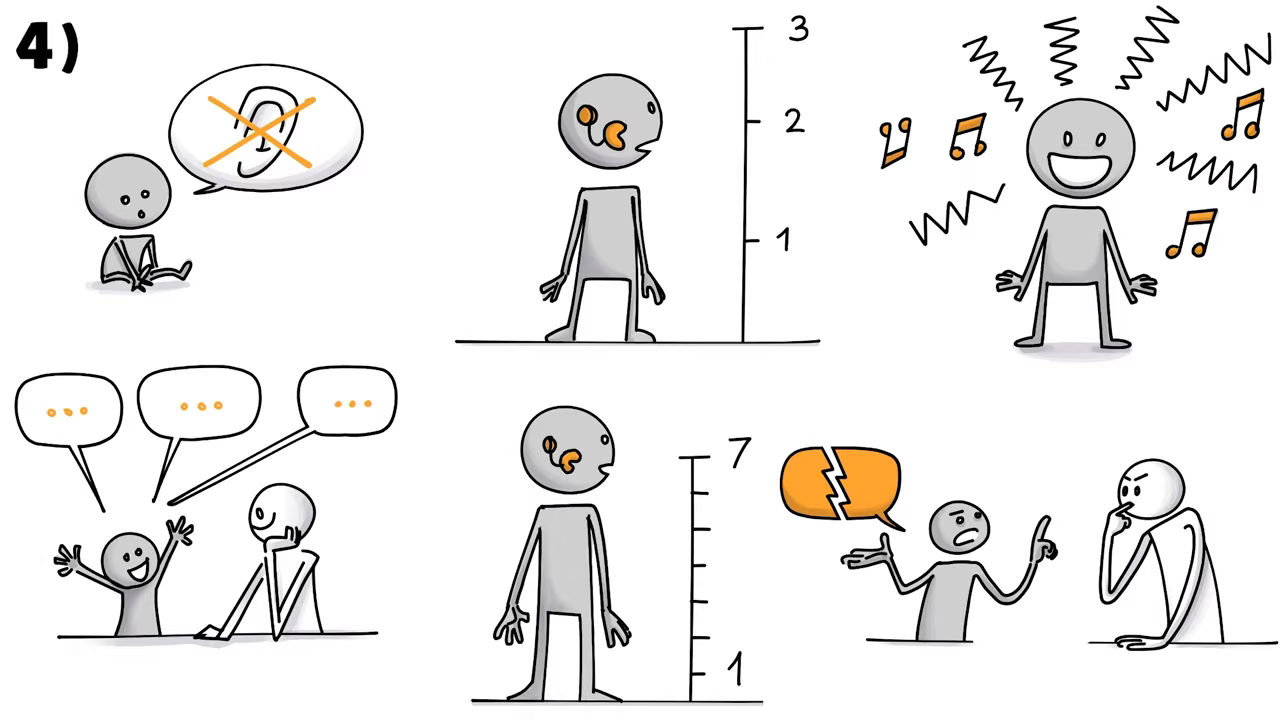
These ages describe patterns, not guarantees for individual children. The broader lesson is that an intervention’s timing can influence how effectively a developing brain uses the input it receives.
5. Language: Early Experience Builds More Than Vocabulary
Language development involves more than memorizing words. Children also acquire the patterns that allow them to combine words into meaningful sentences.
The tragic case of Genie Wiley illustrates how difficult this can become after profound early deprivation. Isolated from ordinary language experience until age 13, she later received extensive help. She acquired words and some ability to communicate, but her speech remained largely limited to short, grammatically incomplete sentences.
Her experience involved severe abuse and deprivation, so it should not be treated as a clean experiment in language learning. Still, it highlights the importance of early opportunities to communicate.
Research with Chinese- and Korean-born immigrants offers another perspective. English grammar scores tended to decline as age of arrival in the United States increased, with the age-related pattern leveling off around puberty.
Together, these examples suggest that early language experience offers advantages that later instruction may not fully reproduce. They do not mean that older children or adults cannot learn another language.
Puberty Brings Another Period of Sensitivity
Many foundational developmental windows are concentrated in the first several years, often before about age seven. But there is no single birthday when every window closes.
During puberty, the brain remains especially sensitive to:
- Social feedback: how other people respond to us.
- Risks: the appeal and consequences of uncertain experiences.
- Rewards: the outcomes that motivate behavior.
This period also brings vulnerability. Harmful substance exposure, excessive or inappropriate medication use, and chronic stress can have lasting effects on a developing brain. That concern is not a reason to stop prescribed treatment, but a reminder that adolescence remains an important stage of brain development.
Early Experiences Lay Foundations, Not a Finished Life
Lorenz regarded childhood experiences as deeply important to later scientific and philosophical development. His broader insight reaches beyond any single skill: early life helps establish how we perceive, communicate, relate, and explore.
The five windows point toward a shared lesson. Developing brains need timely access to the experiences their systems depend on: healthy prenatal conditions, clear sensory input, dependable care, and opportunities for language.
Timing matters, but early difficulty is not a reason to give up. Understanding developmental windows helps explain why early support is valuable and why a concern deserves attention when it first appears.
|