Starting kindergarten introduces a child to new people, new routines, and a new place to explore. But it can also mean suddenly losing access to the person who makes the world feel safe.
In the 1980s, German psychologist Kuno Beller wondered whether the sickness he observed among children entering kindergarten was only about infections. Could the emotional stress of abrupt separation from their parents also play a role?
With a group of educators, he tested a different approach: let a parent stay until the child has begun to form a trusting relationship with a teacher. In that comparison, children who could not bring a parent along were three times as likely to miss a day because of sickness as those who could.
The finding points to an important question about starting childcare: what if a gentler separation begins not with learning to be alone, but with learning to trust someone new?
Key Takeaways
- A gentle kindergarten transition builds trust with a teacher before extending separation from a parent.
- The child’s response should guide the pace of the five-phase settling-in process.
- Successful adjustment means the child can accept comfort and return to play, even after tears.
Why a Familiar Adult Makes Exploration Possible
The German settling-in model draws on attachment theory, associated with John Bowlby. Its central idea is that a strong relationship with a primary caregiver provides a secure base during a child’s early years.
With that base, a child can venture into unfamiliar territory knowing there is someone to return to for reassurance. When that sense of security is uncertain, exploration can feel much more threatening.
Applied to kindergarten, the aim is straightforward: help the child build a secure relationship with a teacher before expecting them to manage without their parent present. The teacher can then become another safe base during the parent’s absence, rather than an unfamiliar person left to handle an overwhelming goodbye.
This approach is especially important for children aged seven to 36 months, who can be particularly vulnerable to the stress of separation anxiety.
The Five Phases of a Gentle Kindergarten Transition
The model follows five phases, but it is not a race through a fixed calendar. The child’s response helps determine how quickly the transition moves forward.
Phase 1: Prepare the Family
Before the child begins, parents learn what their role will be and why their presence matters. Accompanying a child is not simply a matter of sitting in the room. It gives the child access to a familiar source of comfort while a new relationship develops.
The family then chooses one trusted person to accompany the child through the process. This can be a mother, father, grandparent, or another familiar caregiver.
Phase 2: Explore Together
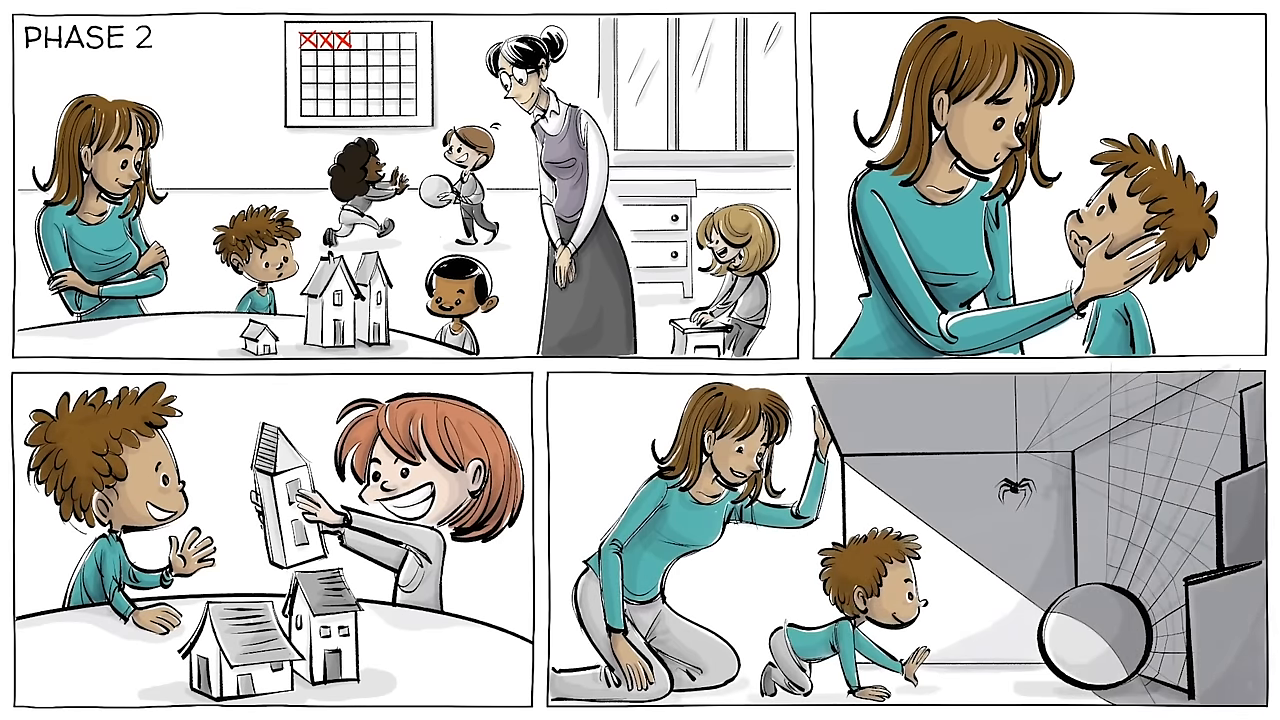
For approximately the first three days, the accompanying adult stays with the child in the new environment. They offer reassurance and comfort whenever needed.
With that support nearby, the child can begin to explore the room, meet other children, and get to know the teacher. The setting becomes familiar without requiring the child to cope with everything new at once.
Phase 3: Try a Brief Separation
Often around the fourth day, the parent leaves for a short period. This brief separation helps the adults understand the child’s anxiety and response to being without their familiar caregiver.
The step is inspired by Mary Ainsworth’s Strange Situation, which examines how young children respond to separation and reunion. Here, the practical purpose is to help the parent and teacher decide how much more settling-in time the child needs.
That may mean roughly another 10 days. Some children, however, need weeks or even months. The timetable should reflect the child’s needs, not simply the number of days that have passed.
Phase 4: Gradually Extend Time With the Teacher
The teacher now takes full responsibility for the child’s care while the parent remains in the background. The parent begins leaving for gradually longer periods: perhaps five minutes, then 15 minutes, and eventually an hour.
An hour may seem short to an adult. In a young child’s world, it can feel like an eternity.
These repeated departures and reunions teach something important alongside trust in the teacher: when a parent leaves, they come back.
Phase 5: Recognize the New Safe Base
The transition is complete when the child accepts the teacher as a reliable source of comfort and security.
This does not necessarily mean a goodbye without tears. A child might cry at the entrance, accept comfort from the teacher, relax, and soon return to cheerful play. That ability to be reassured is a meaningful sign that the new relationship is working.
Success is not simply the absence of crying. It is the presence of trust.
Four Practices That Support Settling In
The phases work alongside four practical arrangements that make the transition more predictable and comforting.
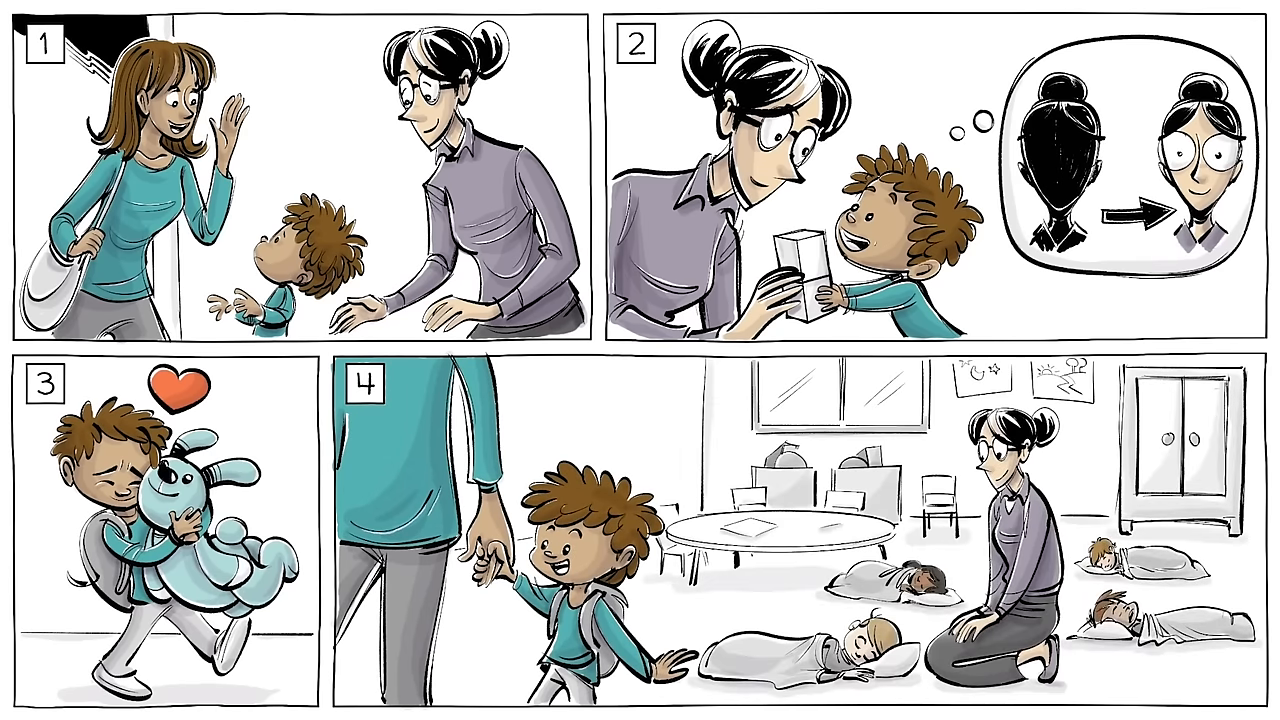
- Say a clear goodbye. Each time the parent leaves, they should let the child know. This helps the child understand that they are now staying with the teacher.
- Keep the same dedicated teacher. A consistent, familiar person gives the child the opportunity to build a trusting relationship throughout the process.
- Bring a favorite stuffed animal. A comforting object from home can offer additional reassurance in an unfamiliar setting.
- Keep attendance to half days, without naps. In this model, the child does not move into longer days and nap time until the settling-in process is complete.
How to Tell Whether the Transition Is Working
Parents and educators can look for several signs that the child is becoming comfortable:
- The child has developed a trusting relationship with the teacher.
- Crying after separation lasts only a short time.
- The child can calm down after saying goodbye and return to play.
- Eventually, the child wants to go to kindergarten.
These signs shift attention away from how quickly a parent can leave and toward what happens after the goodbye. Can the child receive comfort? Can they relax? Does the classroom become a place they want to explore?
Build Security Before Expecting Independence
Bowlby emphasized that a threatened relationship with a loved person can bring both anxiety and anger. For a young child, distress at separation is therefore not just an obstacle to a smooth morning. It is an emotional response worth understanding.
The settling-in model responds by building a new bond before extending the separation. The parent provides reassurance, the teacher becomes familiar, and the child gradually learns that care remains available even when their parent is elsewhere.
The larger lesson is simple: security and independence are not opposites. A dependable relationship can be what gives a child the confidence to step into a new world.


