How do children learn to build a tall tower? They could listen to an explanation of physics, study a diagram, and draw the ideal structure. Or they could receive a handful of spaghetti, some tape, and a marshmallow, then try to make it stand.
Both approaches can teach something about towers. But the second creates opportunities to learn much more: how to test an idea, communicate with a team, respond to failure, and try again.
That is the central promise of project-based learning. Students do not simply receive knowledge. They work on a challenge that gives them a reason to use it.
What Is Project-Based Learning?
Project-based learning, often shortened to PBL, is a teaching approach that involves students in a long-term, in-depth investigation of a real-world challenge.
Instead of relying mainly on memorization or following instructions along a smooth path to an answer, students actively work through a problem. In doing so, they develop several skills at once. Understanding the subject matters, but so does deciding what to try, discussing possibilities, and figuring out why something did not work.
For a fuller introduction to this approach, PBLWorks explains how projects become the vehicle for learning, rather than simply an activity added after instruction.
One Objective, Two Very Different Classes
Imagine two teachers with the same objective: help their students learn how to engineer a tall tower. We can call them Mr. Listen and Mrs. Do.
Mr. Listen: Explain First, Design Second
In Mr. Listen’s classroom, students sit at their desks facing the blackboard. He explains some principles of physics, then asks those who are still paying attention to design the best possible structure for a high tower.
The class may acquire some knowledge about towers. A few students may develop an understanding of engineering, and one might even work out an excellent design on paper. But receiving an explanation does not necessarily make the learning last. A week later, much of it may already be forgotten.
Mrs. Do: Build, Test, and Discover
Mrs. Do arranges her students in groups. Each group receives:
- 20 strands of uncooked spaghetti
- Adhesive tape
- Cotton thread
- Marshmallows
The challenge is simple: in 18 minutes, build the tallest possible structure that can support a marshmallow.
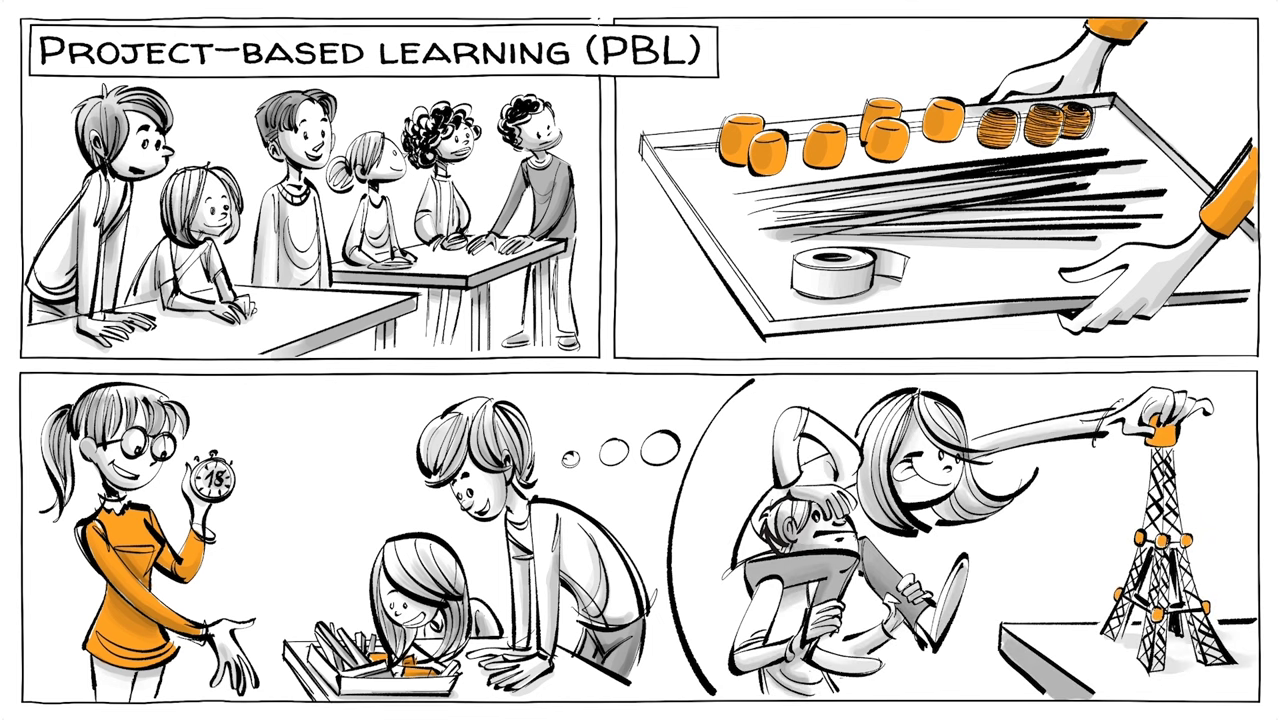
This short exercise illustrates learning through a project, although full project-based learning involves a longer investigation. The difference is immediately clear: students must turn their ideas into something that works.
The activity is also explored in Tom Wujec’s talk on the marshmallow challenge, which examines what building a tower can reveal about teamwork.
What Students Learn Beyond Tower Construction
Mrs. Do’s students are not learning only about height and stability. They are working with construction, physics, creativity, and cooperation at the same time.
They need to explain their ideas, consider alternatives, and make decisions together. Their structure gives them direct feedback: it either supports the marshmallow or it does not.
Perhaps the most important lesson arrives when the first tower falls. A failed attempt does not have to end the task. Students can change their approach and try again.
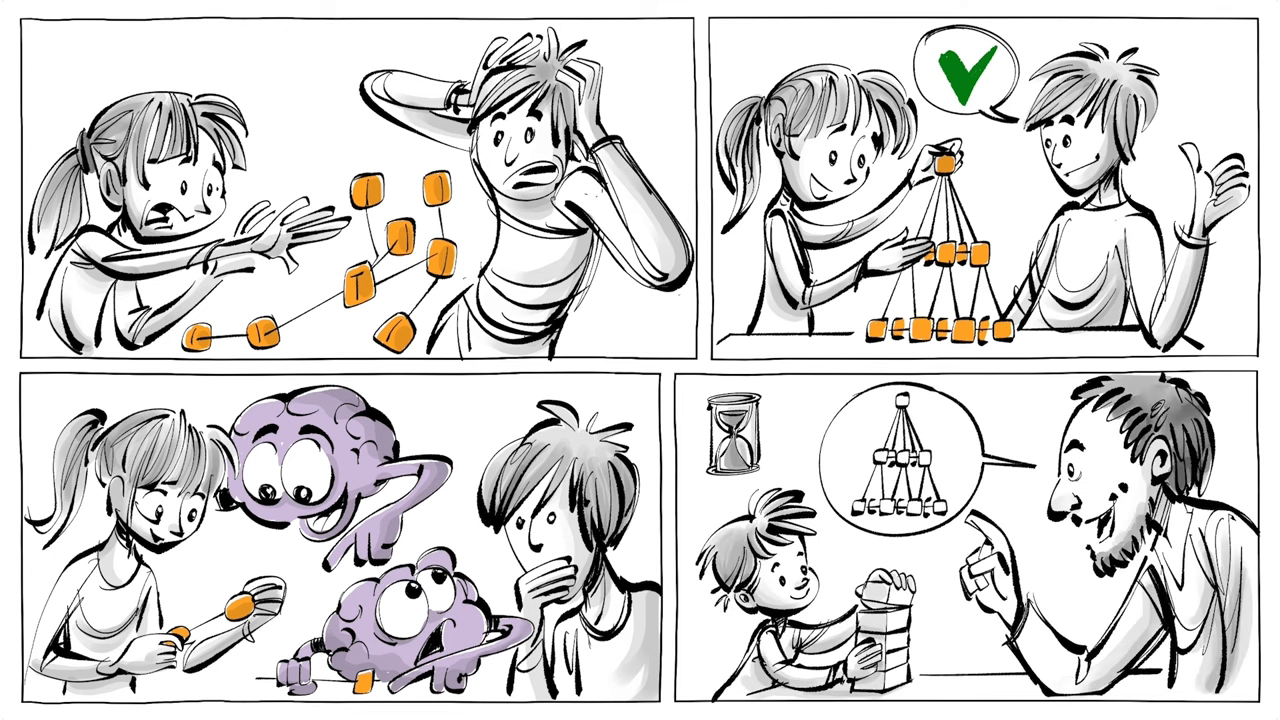
They learn how to learn. The experience connects an idea with an action and a result. That can make the lesson more memorable than an explanation alone. Some students may remember such a classroom challenge years later.
The Benefits of Project-Based Learning
The benefits of PBL extend beyond making lessons more engaging. The approach gives students opportunities to develop:
- Deeper understanding: Students put ideas to work instead of only recalling them.
- Communication: Group work requires students to explain and discuss their thinking.
- Critical thinking: Students assess possibilities and respond to results.
- Creativity: A challenge leaves room to develop and revise different solutions.
There is also evidence of stronger academic outcomes. Randomized controlled trials involving thousands of students have found that project-based learning can outperform traditional curricula across academic disciplines. Edutopia’s overview of this research provides further context for those findings.
Projects and Instruction Work Together
The choice does not have to be Mr. Listen or Mrs. Do. Effective teachers often combine projects with traditional instruction in an active learning classroom.
Students try, fail, and build. The teacher helps them make sense of those experiences and connect them to theory. Practical work gives the explanation something concrete to explain, while instruction helps students understand more than they could discover through trial and error alone.
The important question is not simply how much material the teacher has covered. It is what students have discovered, understood, and learned to do. A tower may eventually fall apart. The ability to learn from building it can last much longer.
|