A teenager who struggles to wake up for school may be fighting more than an alarm clock. During puberty, the body’s natural sleep schedule shifts later. Yet the school day often begins just as early as before.
The result is a mismatch between biology and social expectations. Teenagers become sleepy later at night but still have to get up early, leaving less time for the rest their brains and bodies need. That lost sleep can affect learning, emotional well-being, stress, and appetite.
To understand why teens are tired in school, we first need to understand the clock inside us.
How the Body Regulates Sleep and Wakefulness
Humans spend roughly a third of their lives asleep. Our tendency to wake with daylight and become drowsy at night is guided by a roughly 24-hour internal cycle called the circadian rhythm.
This rhythm works alongside chemical signals that help regulate alertness and sleep. Three important players are:
- Melatonin: A hormone whose production responds to light and darkness. Its rise in the evening helps signal that it is time to sleep.
- Cortisol: A hormone with a daily rhythm that helps prepare the body for wakefulness as morning approaches.
- Adenosine: A chemical that builds up during waking hours, gradually increasing the pressure to sleep.
These signals change throughout the day and night rather than staying at a fixed level. Together, they help explain why we can feel alert at one hour and ready for bed at another.
Not everyone follows exactly the same schedule. Individual differences in sleep timing are known as chronotypes. Some people naturally prefer earlier mornings, while others feel more awake later in the day. But our sleep timing also changes as we grow and age.
Why Puberty Pushes Sleep Later
Children typically have an earlier sleep schedule. During puberty, the timing of their sleep-related signals shifts. Melatonin begins rising later, and teenagers often become sleepy about two hours later than they did as children.
This shift is known as a delayed sleep phase. It means that an adolescent’s body may not be ready to settle down at the bedtime adults expect.
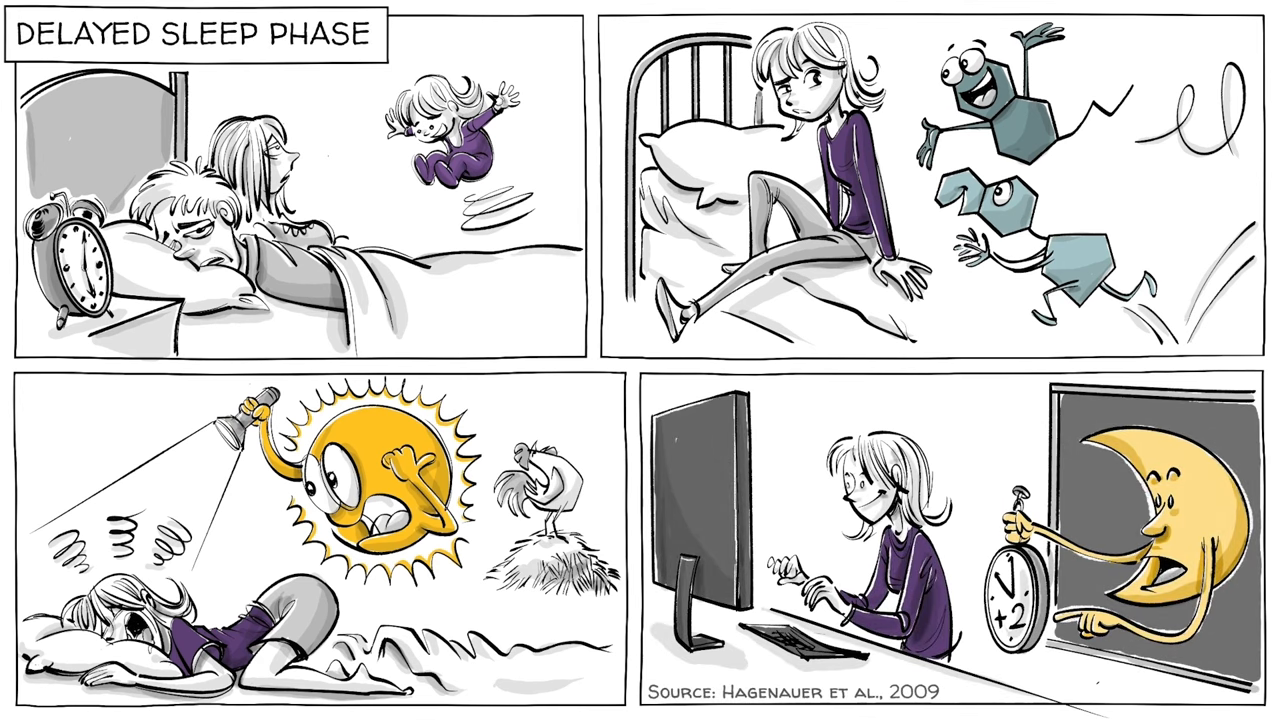
The difficulty appears when the morning schedule does not move with the biological clock. If sleep begins later but the alarm rings at the same early hour, the night gets shorter.
Many teenagers then sleep less during the school week and longer on weekends. The mismatch between their biological timing and their social schedule is called social jet lag. They do not need to cross a time zone to experience it. Their school timetable and internal clock are already out of step.
Research on adolescent sleep timing helps explain why this change is a developmental issue, not simply a preference for staying up late.
What Sleep Loss Does to Teenagers
Attention, learning, and memory
A tired student can struggle to pay attention and absorb new information. But the effect does not end when the lesson is over.
Sleep helps consolidate experiences into long-term memory. Without enough rest, teenagers may also have trouble retaining what they learned during the day. Sleep loss can therefore interfere with both taking in knowledge and keeping it.
Emotions and self-understanding
Adolescence brings new sensations, changing relationships, and questions about identity. Managing all of that can be difficult even with enough sleep.
Sleeping less can also mean getting less REM sleep, the stage strongly associated with dreaming and involved in emotional processing. Insufficient rest may leave teenagers more sensitive, moody, or less able to make sense of their feelings.
What looks like an exaggerated reaction may have sleep loss as part of its background.
Stress and mental health
Sleep and stress can form a difficult feedback loop:
- Too little sleep makes the day more stressful.
- That stress makes it harder to settle down at night.
- Another poor night leaves the teenager less rested the next day.
This cycle can be especially hard on adolescents who already feel tense. It can interfere with creativity and contribute to difficulties involving anxiety or addictive behavior.
Research has also reported increases in teenage suicide rates around the start of a new school year. Sleep loss may be one contributing factor worth investigating, but that association does not establish that insufficient sleep or school schedules alone cause suicide.
Appetite and physical health
Sleep also helps regulate the hormones involved in appetite. When teenagers do not get enough rest, they may feel driven to eat more during the day.
Over time, disrupted sleep and appetite regulation can contribute to weight-related problems and difficulties with eating. The consequences of an early alarm are not confined to feeling sleepy in the first lesson.
Could Later School Start Times Help?
If part of the problem is a mismatch between school schedules and adolescent biology, one solution is to bring those schedules closer together.
Later school start times give teenagers more opportunity to sleep according to their natural rhythm. Rather than expecting every adolescent to become sleepy earlier, schools can reconsider when students are required to arrive.
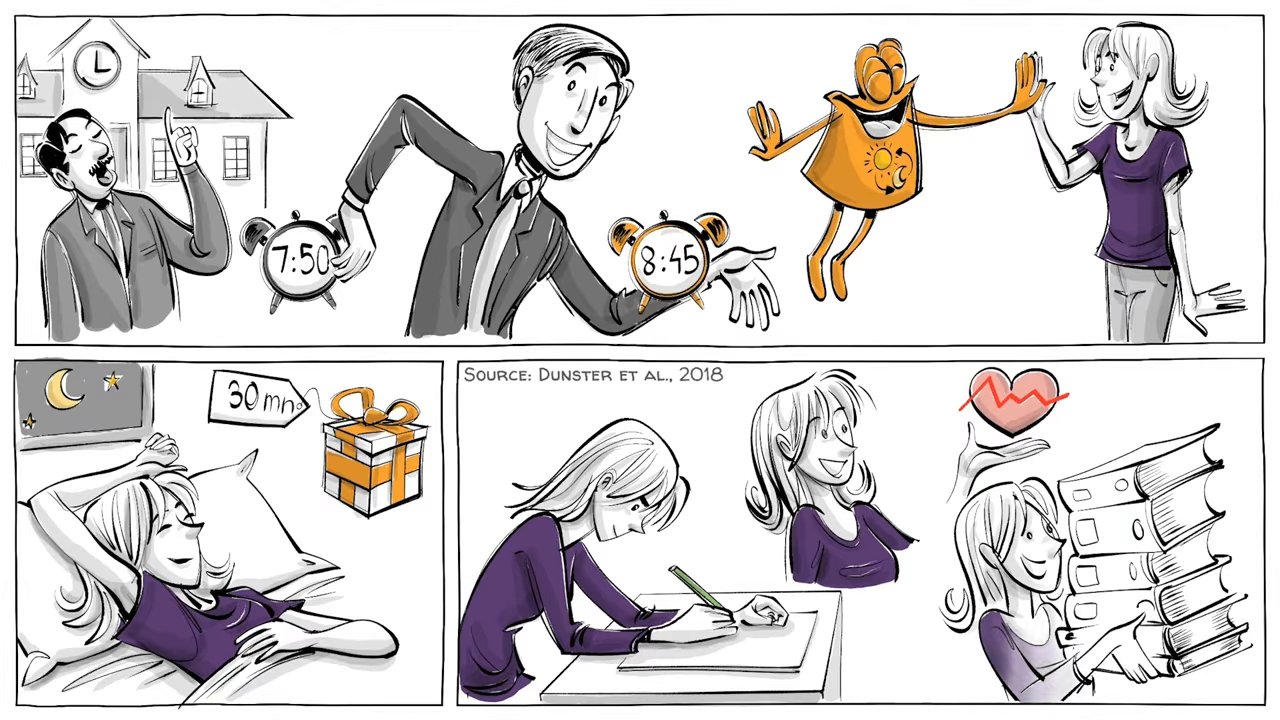
Seattle offers a useful example. In the fall of 2015, Seattle Public Schools announced a change in secondary-school start times from 7:50 a.m. to 8:45 a.m.
After the change, students gained, on average, more than 30 minutes of sleep each school night. Reported benefits included better concentration, improved well-being, and greater motivation to learn. The University of Washington’s account of the Seattle study provides more detail about the findings.
Making Room for Adolescent Biology
Teenage tiredness is not simply a question of motivation. Puberty changes when the body becomes ready for sleep, while school schedules often remain unchanged.
Recognizing that mismatch changes the question. Instead of asking only why teenagers cannot wake up earlier, we can also ask whether schools should begin later.
If we want teenagers to learn and thrive, giving them a timetable that makes adequate sleep more possible is a sensible place to start.
|